| Place | Pilot | Race No | Aircraft | Time |
| 1 | Frank Fuller | 23 | P-35 | 7:54 |
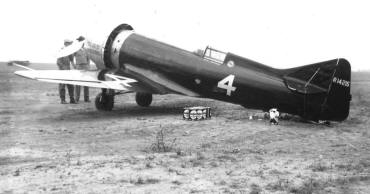
| 2 | Earl Ortman | 4 | Marcoux | 9:49 |
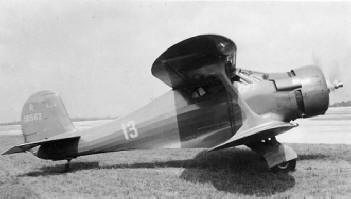
| 3 | Jacqueline Cochran | 13 | Beechcraft | 10:29 |
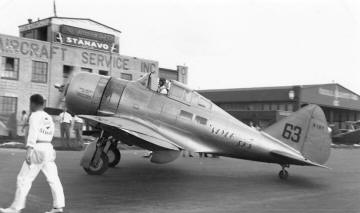
| 4 | Frank Sinclair | 63 | P-35 | 11:02 |
| 5 | Milo Burcham | 20 | Lockheed | 11:03 |
| 6 | Eiler Sundorph | 17 | Sundorph | 12:17 |
| DNF | Bob Perlick | 64 | Beechcraft | 1 |
| DNF | Joe Mackey | 57 | Wedell | 2 |
1. Landing gear collapsed on take-off no injuries.
2. Broken oil line, landed St. Lewis no injuries.
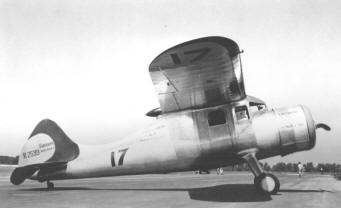
Sundorph Special
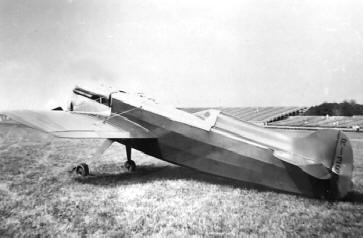
Marcoux-Bromberg Ortman
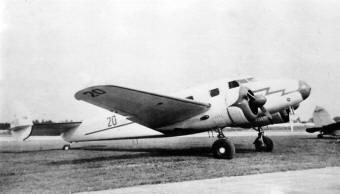
Lockheed Electra Burcham
Seversky P-35 Sinclair
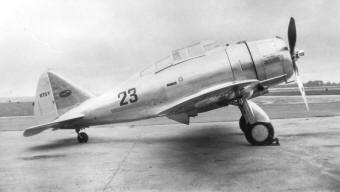
Seversky Fuller
Beechcraft Cochran
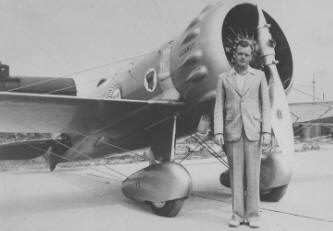
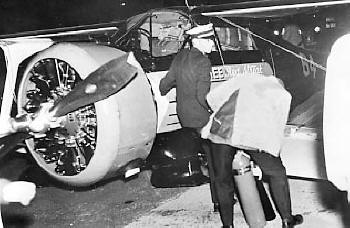
Turner's Wedell-Williams Mackey
Bob Perlick Beech "Red Streak"
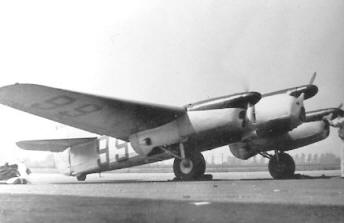
Alex Papana's 3-engine Bellanca DNS
During the planning sessions for 1937 it was decided to send
Major Al Williams to Germany to again invite Ernst Udet
to the air races, but Udet was now a high ranking officer in the
Luftwaffe and his superiors would not allow him to attend. The
German Government did send a number of civilians to perform
aerobatics and demonstrations plus their new mail plane that
flew half way across the Atlantic where it would land next to a
seaplane tender, refuel and fly on to New York. The seaplane
was anchored a little offshore on Lake Erie on the west side
of Cleveland's lakefront and flew over the air races daily.
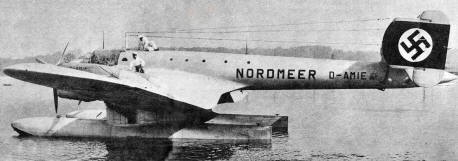
German mail plane NORDMEER
(Bill Meixner collection)
Count Otto Von Hagenburg, of Germany winner of the 1937
International aerobatic championship at Zurich Switzerland,
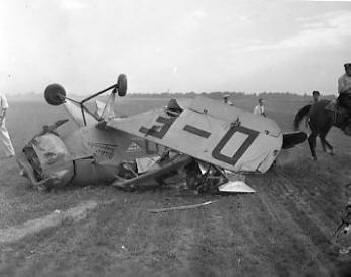
was master of inverted flight. Flying daily
only inches from the
ground, caught his tail in the grass as he
pulled up on his last
pass of the day,
the Bucker Jungmeister rolled up into a ball.
Von Hagenburg was
only slightly injured
as the center section
of the plane did not collapse The next day he
flew Romania's
Captain Alex Papana's Bucker doing the same routine.
While both Von Hagenburg and Papana were performing great
aerobatics, a third pilot, Commander Jose Cabral of the
Portuguese Navy
did his acrobatic routine in a seaplane.
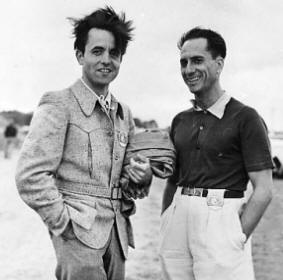
Hagenburg
and Papana
Bucher Jungmeister crash
Parachute jumping demonstrations were big crowd
pleasers. Some of these jumpers
developed their own act and wore a "bat suit" jumping from about 10,000 feet and
flying
as a "bat man" to 1,000 feet before opening their parachute.
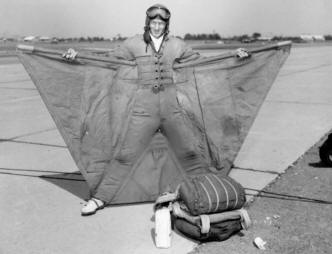
"Batman" Tommy Boyd
(Bill Meixner collection)
Greve Trophy Race
Greve Trophy Race 10 laps on a 10 mile course Total Purse $15,00
| Place | Pilot | Race No | Aircraft | Speed |
| 1 | Rudy Kling | 301 | Folkerts SK-3 | 232.272 |
| 2 | Steve Wittman | 111 | Chief Oshkosh | 231.990 |
| 3 | Gus Gotch | 70 | Rider R-4 | 231.593 |
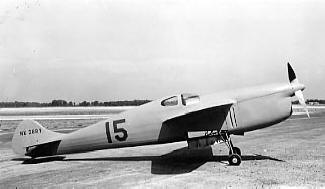
| 4 | Roger Don Rae | 15 | Folkerts SK-2 | 224.197 |
| 5 | Marion McKeen | 33 | Brown B-2 | 223.644 |
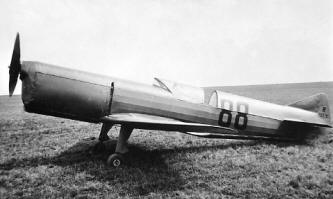
| 6 | Frank Haines | 88 | Haines Special | 177.715 |
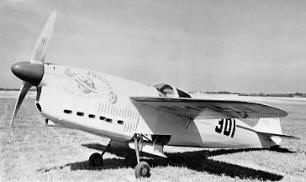
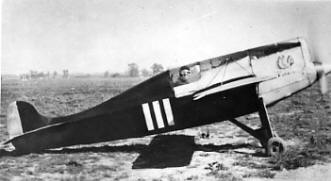
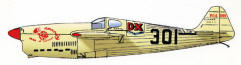
Rudy Kling Folkerts
Steve Wittmann's Chief Oshkosh
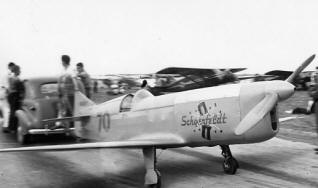
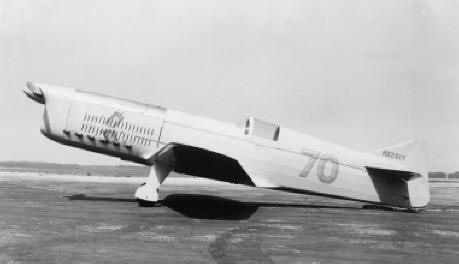
Gus Gotch Schoenfeld
Roger Don Rae Folkerts
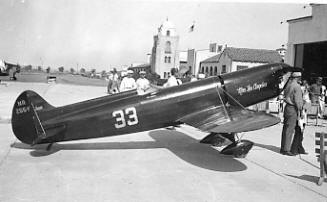
Marion McKeen Miss Los Angeles
Frank Haines Mystery ship
Amelia Earhart Memorial Handicap Race
| Place | Pilot | Aircraft | Speed |
| 1 | G O'Donnell | Ryan | 129.653 |
| 2 | B Browning | Cessna | 144.562 |
| 3 | E Gardner | Cessna | 136.560 |
| 4 | A Gipson | Monocoupe | 112.562 |
| 5 | D Munro | Rearwin | 88.893 |
Thompson Trophy Race
Unlimited, free-for-all; Thompson Trophy Race
200 miles, 20 laps over a 10-mile course Total prize $24,000
The 1937 Thompson Trophy Race was full of surprises to say the least.
Early on Steve Wittman flying his Curtiss D-12 powered racer took the
lead and kept Turner, Ortman and Kling at bay, by the end of the eighteenth
lap Wittman was a half of a lap ahead of all the rest and gaining. As the
nineteenth started he pulled up to 2000 feet and slowed down allowing
Roscoe Turner to gain the lead with Ortman and Rudy Kling some distance
behind. On the back side of the course Roscoe blinded by the sun and oil
spray on his windshield thought he had cut inside the pylon. According to
the rules of the race he re-circled the pylon which allowed Ortman to gain
the lead followed by Kling. Earl Ortman was the only pilot in the Thompson
that was equipped with a radio and Benny Howard who was coaching him
from the ground advised him to slow down to save his engine. As the two
racers approached the finish pylon, Kling, who was higher than Ortman
added his last bit of power and dove toward the finish line leading
Earl Ortman by five feet and winning the race by two tenth's of a second.
Kling did not know he won the race, he believed passing Ortman would
give him second place, newsmen rushed up to him with the news he won.
To add to all the confusion, most everyone except the timers thought it
was the 19th lap including the motion picture cameramen. As you can
see from the above photo the camera crew were not filming at the time
Kling passed Ortman, only the still photo records the win. As for Turner,
he did not cut the pylon and he would have won the race had he nor circled
the pylon again. After Steve Wittman landed, Art Chester walked over and
asked what happened to cause him to pull up and slow down? Steve told
Art he didn't know except the engine lost power. Art related the same thing
happened to him and the magneto was at fault. A Bendix factory technician
on the field checked the magneto and found it to be faulty, costing Steve
the race. Another "what if" in racing!
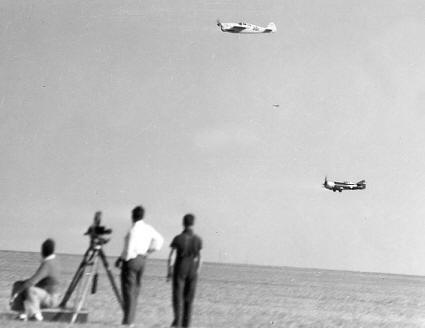
A photo finish
(Bill Meixner collection)
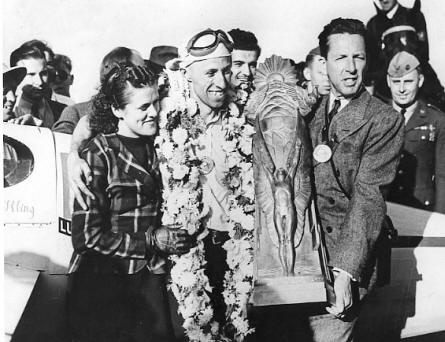
Rudy and Mrs. Kling receive the Thompson Trophy from Fred Crawford
| Place | Pilot | Race No | Aircraft | Speed |
| 1 | Rudy Kling | 301 | Folkerts | 256.910 |
| 2 | Earl Ortman | 4 | Marcoux | 256.858 |
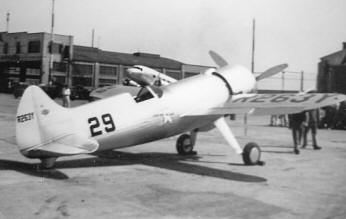
| 3 | Roscoe Turner | 29 | Turner-Laird | 253.802 |
| 4 | Frank Sinclair | 63 | Seversky | 252.360 |
| 5 | Steve Wittman | 6 | Wittman D-12 | 250.108 |
| 6 | Ray Moore | 23 | Seversky | 238.411 |
| 7 | Gus Gotch | 70 | Schoenfeld | 217.810 |
| -- | Marion McKeen | 33 | Brown B-2 | 1 |
| -- | Joe Mackey | 25 | Wedell-Williams | 2 |
1 Dropped out in the 13th lap
2 Dropped out in the 17th lap
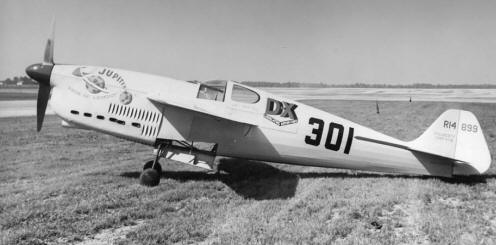
Rudy Kling's Folkerts SK-3
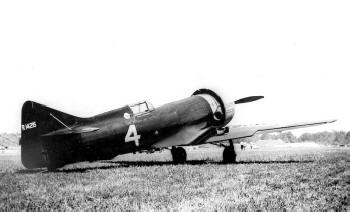
Ortman's Marcoux-Bromberg
Turner-Laird Meteor
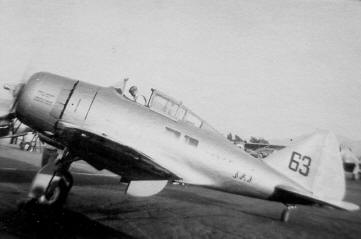
Sinclair's Seversky P-35
Steve Wittman's D-12
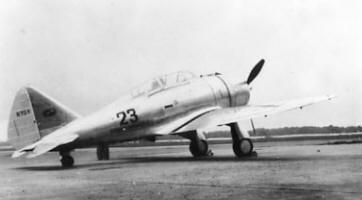
Ray Moore P-35
Gus Gotch Firecracker
Photos are from the Hansen collection unless otherwise noted.
 Please send comments to Bill Meixner
You are the
th person to pop in on us
since December 22, 2006. Thank You for landing, please go-around and land again later. C A V U
Updated Wednesday, March 06, 2013